The “This Booty Belongs to a Crazy Gamer” T-Shirt Design: A Versatile Asset for Your Print-on-Demand Workflow
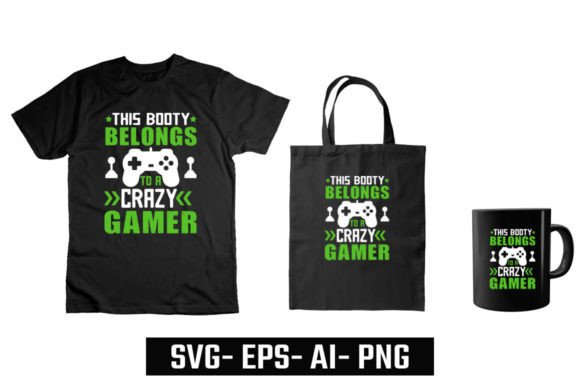
Finding the right digital asset for a print-on-demand (POD) store can be a decisive step in a larger entrepreneurial workflow. It’s not merely about picking a graphic; it’s about integrating a professional, adaptable design into a structured process of product creation, marketing, and sales. The This Booty Belongs to a Crazy Gamer t-shirt design represents a specific type of asset designed to streamline this process. Its purpose is to serve as a high-quality, ready-to-use core component for creators aiming to capitalize on gaming culture and humor within their POD operations.
Understanding the Role of a Pre-Made Design in a POD Business
Launching and maintaining a successful POD store involves a multi-stage workflow. It begins with market research and niche identification, moves through product design and asset preparation, and culminates in listing optimization and store management. Introducing a pre-made design like This Booty Belongs to a Crazy Gamer fits strategically into the design and asset preparation phase. For many creators, this phase is a bottleneck. Creating original vector artwork requires significant time, skill, and software expertise. By sourcing a professional digital clip art package, you effectively delegate the most technical part of the design process, freeing your resources for other critical tasks such as store setup, customer engagement, and analytics review.
This approach is particularly effective when targeting well-defined communities, such as gamers. The design acts as a catalyst, allowing you to quickly test a product idea in a vibrant market without the upfront investment in custom illustration. Its integration into your workflow is straightforward: upon acquisition, the files are evaluated, extracted, and immediately positioned for application onto your chosen POD platform’s product templates.
File Formats and Practical Integration with Production Tools
The utility of any digital asset is determined by its compatibility and quality. The This Booty Belongs to a Crazy Gamer package provides multiple file formats—SVG, EPS, JPG, and PNG—each serving a distinct function within a production workflow.
The SVG and EPS files are vector graphics. Their primary advantage in a POD process is scalability. Whether you’re applying the design to a small sticker or a large poster, these files maintain sharpness without pixelation. This is crucial for quality control across a range of products. Most POD platform interfaces (like those of Shopify, Etsy, or specialized POD services) accept SVG uploads directly, allowing for easy placement and resizing on their virtual product mockups.
The high-resolution JPG and PNG files (300 DPI) serve alternative purposes. The PNG, with its potential for transparency, is ideal for applying the design onto colored garments or backgrounds without a white bounding box. These raster files are also the preferred format for many cut machines used in physical crafting workflows, such as creating vinyl decals or stickers for supplemental merchandise.
Extraction and Initial File Management
The delivery method—a compressed ZIP file—is a standard practice for digital asset distribution. The first step in your implementation process is extraction. Using tools like WinZIP, WinRAR, or your operating system’s built-in extraction function (a simple double-click) is a routine preparatory task. Immediately after extraction, we recommend a simple organization step: create a dedicated project folder for this design. Label it clearly and store all extracted formats within it. This prevents file clutter and ensures you can quickly locate the correct format for any given application later, maintaining efficiency in your ongoing operations.
Broad Application Across Product Lines and Creative Projects
The value of a versatile asset lies in its potential for reuse and adaptation. While the core product is a t-shirt, the design’s applications extend across a wider creative and commercial workflow. Here is how it can interact with different projects and tools:
- T-Shirt & Apparel Design: The primary use. Upload the SVG to your POD platform’s design module for t-shirts, hoodies, or tanks. The process is typically drag-and-drop, followed by scaling and positioning.
- Complementary Merchandise: Using the same files, you can expand your product line seamlessly. Apply the design to coffee mugs, tote bags, or caps offered by your POD supplier without needing new assets, ensuring brand consistency.
- Physical Crafting & Decals: For entrepreneurs who also manage physical production (like vinyl cutting), the PNG file can be imported into software like Sure Cuts A Lot or Adobe Illustrator for cutting machines to create stickers, decals, or iron-on transfers.
- Marketing & Presentation Materials: The high-quality JPG can be used in digital marketing—social media posts, email newsletters, or blog articles showcasing your new store item. It provides a professional visual for your promotional workflow.
This multi-use capability means one asset purchase supports multiple output channels, a key principle for efficient resource management in a small business.
Workflow Integration: From Asset to Live Product
Let’s outline a practical scenario for integrating the This Booty Belongs to a Crazy Gamer design into a typical POD store launch workflow.
Phase 1: Preparation & Acquisition. You’ve identified the gaming niche as a target. After selecting this design package, you download and extract the ZIP file into your organized project folder.
Phase 2: Platform Upload & Product Creation. You log into your POD service provider’s dashboard. Navigating to the product creation section for t-shirts, you upload the SVG file. You adjust its size and placement on the virtual t-shirt template, perhaps adding complementary text or adjusting colors if the platform allows. You then fill in the product details: title (“This Booty Belongs to a Crazy Gamer T-Shirt”), description targeting gamers, and relevant tags.
Phase 3: Quality Assurance & Listing. Before publishing, you use the platform’s preview tool to check the design on various shirt colors and styles. You ensure no elements are distorted. This is a critical quality control step in your process.
Phase 4: Expansion & Marketing. Once the t-shirt is live, you use the same asset files to quickly create a matching mug or poster listing, leveraging the existing design to multiply your store’s offerings without additional design work. You then utilize the JPG file to create graphics for your social media launch campaign.
Factors for Long-Term Usability and Store Growth
Thinking beyond the initial listing, a well-made digital asset contributes to long-term store health. The vector nature (SVG/EPS) of the This Booty Belongs to a Crazy Gamer design means it remains future-proof. If POD platforms update their template sizes or if you decide to move to a different provider, the design can be resized infinitely without loss of quality, protecting your initial investment.
Furthermore, consistency in design across your product range builds a more coherent store identity. Using this same graphic on t-shirts, stickers, and mugs creates a recognizable theme for your store within the gaming zone, which can aid in customer retention and brand recall. This strategic reuse is a smart approach to scaling your product catalog efficiently.
Final Observations on Implementation
Successfully using a pre-made design hinges on viewing it not as a standalone product, but as a key input into a broader operational process. The This Booty Belongs to a Crazy Gamer package is a tool that eliminates the barrier of graphic creation. Its integration is less about creative execution and more about logistical execution: file management, platform compatibility checks, and systematic application to multiple product types. By handling these steps methodically—organizing files upon receipt, understanding the purpose of each format, and sequentially applying the design to your primary and secondary products—you embed this asset smoothly into your workflow, turning a single download into the foundation for multiple revenue-generating listings.
The result is a more streamlined path from concept to live store item, allowing you to focus your energies on the business aspects of your POD venture: marketing, customer service, and strategic growth. For the entrepreneur, marketer, or hobbyist looking to participate in the gaming merchandise space, such a ready-to-use template is not just a design; it’s a process accelerator.